
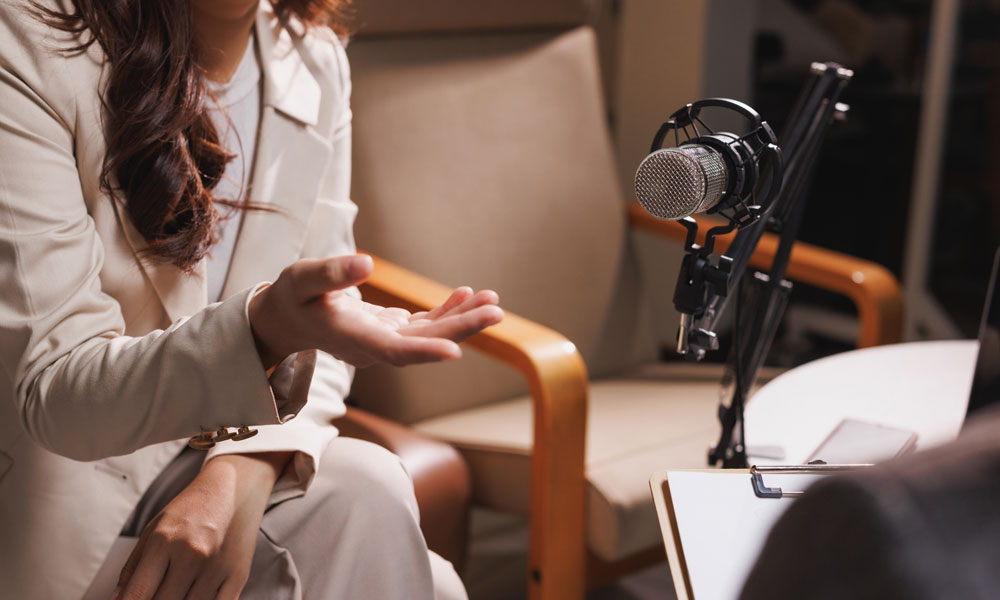
A decade ago, most spokespeople prepared for a very specific moment: a scheduled interview in a studio, a press conference, or a journalist arriving with a microphone. Today, the “media moment” might still be a studio booking — but just as often it’s a live Zoom from a kitchen table, a Teams interview between meetings, or a phone call that becomes a headline within minutes. For communications teams, the question is no longer whether to invest in Media Training, but which format delivers the right mix of realism, convenience, and performance under pressure — especially when Crisis Media Training is part of the picture.
The good news is that you don’t have to choose one approach forever. Studio-based, online, and blended programmes each have clear strengths. The key is understanding what you need your spokespeople to be able to do, when they need to be ready, and how to build practice into busy diaries without losing the “on-camera” edge.
What you’re really training for (and why format matters)
Media Training is not just about knowing what to say. It’s about being able to say it clearly, calmly, and credibly when the stakes are high and the clock is ticking. That includes:
- landing key messages without sounding scripted
- handling interruptions, loaded questions, and false assumptions
- staying composed when you don’t have all the facts yet
- avoiding speculation while still being helpful
- coming across as human, confident, and trustworthy
Different formats train different muscles. The best programmes match the format to the behaviours you want to build — and the risks you need to reduce.
Studio-based media training: the gold standard for realism
In-person studio training is the closest thing to “match conditions”. You get the physical set-up, lighting, cameras, microphones, and a sense of occasion that changes how people perform. That heightened pressure is useful: it exposes habits that might not show up in a more relaxed environment.
Pros
- Most realistic preparation for TV and radio appearances
- Stronger feedback on body language, eye line, energy, and presence
- Easier to recreate pressure, pace, and professional production standards
- Ideal for senior spokespeople who may face high-profile interviews
- Highly effective for Crisis Media Training simulations (doorstep, press conference, rapid updates)
Cons
- Requires travel and diary coordination (often the biggest barrier)
- Can feel intense for first-timers without careful staging
- More cost and logistics than online sessions
- Harder to run frequent refreshers at scale
When studio makes most sense
- You have a high-stakes broadcast coming up (national or regional TV/radio)
- You’re preparing a small group of senior leaders or designated spokespeople
- You need to stress-test performance under pressure for a crisis scenario
- You want strong “before and after” evidence and detailed playback review
Online media training: flexible, efficient, and closer to modern reality than you might think
Online media training has moved from being a compromise to becoming a powerful option in its own right. Many journalists now conduct interviews remotely, and many organisations are expected to respond quickly from wherever they are. Training in the same environment people will actually use can be a major advantage.
Pros
- Easy to schedule around busy diaries, travel, and multiple locations
- Great for shorter sessions that build skill over time
- Ideal for distributed teams and international spokespeople
- Can replicate remote interview conditions (home/office set-up, webcam delivery, audio discipline)
- Fast to organise for urgent needs, including crisis preparation
Cons
- Less “studio pressure” unless deliberately designed in
- Technology can distract from performance if people are not confident with it
- Harder to coach full-body language and movement
- Risk of people treating it like a normal meeting unless expectations are set clearly
When online makes most sense
- Your spokespeople are more likely to be interviewed remotely than in a studio
- You need a practical, repeatable approach for multiple people
- You want ongoing practice rather than a single intensive day
- You need to prepare quickly due to an emerging issue
- You’re building foundations before moving to more intense studio work
A strong online session should still include realistic questioning, recorded practice, and detailed playback analysis. Without that, it becomes a talk about Media Training rather than Media Training itself.
Blended programmes: the smartest option for most organisations
For many teams, the best answer is not “online or in-person” — it’s a sequence. Blended training combines the convenience of online learning with the realism of studio practice. Done well, it reduces time out of office while improving retention and confidence.
Pros
- Allows frequent short sessions without losing realism
- Builds skills progressively (messages first, performance later)
- Makes studio time more valuable because delegates arrive prepared
- Supports different confidence levels in the same cohort
- Easy to include Crisis Media Training elements at the right moment
Cons
- Requires clear programme design to avoid feeling piecemeal
- Needs consistency in coaching and feedback across formats
- Without a plan, organisations can end up with “training events” rather than a training journey
When blended makes most sense
- You want long-term capability, not just event preparation
- You have a small group of core spokespeople plus a wider bench of subject experts
- You need crisis readiness as well as day-to-day media confidence
- Your team’s diary reality makes full-day training difficult
How to choose the right format: five practical questions
1) What kind of interviews do you actually face?
If most of your media is remote, online training is highly relevant. If senior leaders face studio TV or major radio, in-person practice becomes more important.
2) How high are the reputational stakes?
If the organisation operates in a highly scrutinised sector, or issues can escalate quickly, Crisis Media Training should include pressure testing and realistic simulation — often best delivered in-person, supported by online refreshers.
3) Who are you training: a small leadership team or a wider group?
Small groups of senior spokespeople benefit from studio intensity. Wider groups often need scalable online sessions to build a consistent baseline.
4) What’s the timeline?
If you have an interview next week, you need something that can be scheduled fast. If you’re building resilience over the year, a blended plan gives you repetition and reinforcement.
5) What behaviours are you trying to change?
If the issue is structure, messaging, and clarity, online sessions can work brilliantly. If the issue is presence, confidence on camera, and handling aggressive interruption, studio time pays dividends.
A simple blended model that fits busy diaries (without losing on-camera practice)
Here’s an effective structure many organisations can fit around senior schedules:
Phase 1: Online foundations (2 sessions of 60–90 minutes)
- message development and bridging techniques
- answering tough questions without sounding defensive
- remote interview performance (camera, audio, background, pace)
- recorded practice with immediate playback and coaching
Phase 2: Studio or in-person intensive (half day to full day)
- realistic TV and radio interviews with challenging questioning
- pressure drills: interruption, time limits, reframing, hostile assumptions
- if relevant: crisis simulation elements (rapid updates, holding statements, press conference format)
- detailed review and individual action plans
Phase 3: Online follow-ups (2 short sessions over 4–8 weeks)
- repeat practice to lock in new behaviours
- scenario updates based on current issues and emerging risks
- coaching for specific upcoming interviews or announcements
Phase 4: Maintenance (quarterly or biannual refreshers)
- short online sessions to keep skills sharp
- annual or 18-month crisis simulation, depending on risk and profile
This approach gives you the best of both worlds: realistic “camera pressure” where it matters, and practical repetition that fits real diaries.
Making any format work: the small details that have the biggest impact
Whichever route you choose, outcomes improve dramatically when you:
- base scenarios on your real issues, not generic examples
- record practice and review it properly (not just “talk about it”)
- keep group sizes small enough for individual coaching
- include both proactive interviews (good news, thought leadership) and reactive ones (difficult questions, reputational risk)
- build a bench of spokespeople rather than relying on one or two names
Media confidence is not a personality trait — it’s a practised skill. The right programme design makes that practice realistic, repeatable, and measurable.
Conclusion: choose the format that matches your risk, reality, and resources
Studio-based training is unmatched for realism and pressure testing. Online training is efficient, scalable, and often closely aligned with the interviews organisations actually do today. Blended programmes give you both: the convenience needed for busy schedules and the on-camera practice needed for genuine performance.
If your organisation wants spokespeople who can communicate clearly in routine interviews and stay calm when the heat is on, plan your Media Training as a programme — and treat Crisis Media Training as a capability you maintain, not a box you tick. That’s how you build confidence that stands up to the media spotlight, whatever format it arrives in.