
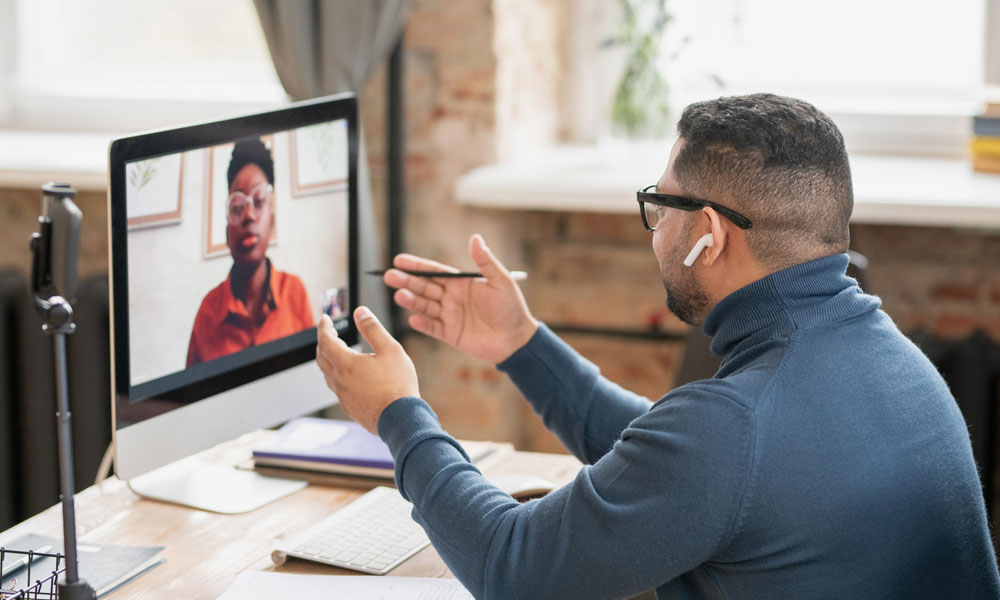
Video is now a central part of workplace communication. From live town-hall meetings and leadership announcements to recorded staff briefings and updates about organisational change, employees increasingly expect important information to be delivered on screen. However, simply placing a senior leader in front of a camera does not guarantee that the message will be clear, credible or engaging.
Video-based media training can help organisations improve the way their leaders and subject specialists communicate, both externally and internally. By using filmed practice interviews, realistic scenarios and bespoke video content, businesses can develop confident speakers while creating internal communications that employees are more likely to understand, trust and remember.
Why internal video communication requires specialist skills
Speaking to employees on camera can appear easier than facing a journalist, but it presents many of the same challenges. The speaker must organise complex information, avoid unnecessary jargon, maintain an appropriate tone and deliver key messages naturally. They may also need to address difficult subjects while demonstrating empathy and authority.
Without preparation, internal videos can become lengthy, hesitant or overly formal. A leader may understand the subject thoroughly but struggle to explain it in terms that matter to employees. Important details can become buried, while vague corporate language may leave viewers uncertain about what is changing or what they need to do next.
Media training gives speakers a practical framework for handling these challenges. It teaches them how to identify the essential message, anticipate questions and communicate with greater precision. These skills are just as valuable during an internal briefing as they are during a television or radio interview.
Using filmed practice interviews to improve performance
Filmed practice interviews are particularly effective because they allow participants to see how they communicate, rather than relying on how they think they come across. Small habits that may go unnoticed in everyday conversation can become obvious on screen. These might include speaking too quickly, avoiding eye contact, using filler words or delivering answers that are far longer than necessary.
During a practice session, a trainer can ask realistic questions based on the organisation’s current priorities. The participant can then review the footage and receive constructive feedback on message structure, body language, vocal delivery and overall credibility.
This process is not about turning leaders into polished presenters with identical styles. The aim is to help each person communicate naturally while removing distractions that weaken their message. Repeated practice builds familiarity with the camera and gives participants the confidence to remain composed when discussing sensitive or complicated issues.
Making town-hall updates clearer and more engaging
Town-hall meetings give leaders an opportunity to speak directly to employees, but they can easily become one-way presentations filled with slides, statistics and corporate terminology. When employees are attending online or watching a recording later, maintaining their attention becomes even more difficult.
Techniques developed through media training can make these updates more focused. Leaders learn to open with the information that matters most, explain why it is relevant and support it with concise examples. They can also practise moving between prepared remarks and spontaneous answers without losing sight of the main message.
Filming a rehearsal before the event helps identify sections that are unclear or repetitive. It also allows the communications team to test the pace, visual setting and likely running time. As a result, the final town hall feels more purposeful and gives employees a clearer understanding of both the organisation’s direction and their role within it.
Supporting communication during organisational change
Change programmes create a particular need for careful communication. Employees may be worried about restructuring, new technology, revised responsibilities or changes to working practices. A poorly delivered video can intensify uncertainty, especially if the speaker appears uncomfortable or avoids addressing obvious concerns.
Video-based media training helps leaders prepare for the questions employees are likely to ask. This includes challenging questions about timescales, job security, workload, decision-making and the reasons behind the change. Practising responses in advance does not mean memorising rigid scripts. It helps speakers give accurate and consistent answers while acknowledging what is not yet known.
Tone is especially important. Employees need facts, but they also want to feel that their concerns have been recognised. Training helps leaders balance reassurance with honesty, avoiding promises that cannot be guaranteed. This can strengthen trust during periods when staff are looking closely at every word and gesture.
Creating staff briefings people can understand
Internal briefings often involve technical, operational or regulatory information. The person with the greatest subject knowledge may not automatically be the person best equipped to explain it on camera. Specialist terminology, detailed background information and complex processes can overwhelm the central message.
Media training helps subject experts translate their knowledge into accessible language without losing accuracy. A useful briefing should answer a few essential questions: what is happening, why does it matter, who is affected and what action is required?
Bespoke training scenarios can be built around real policies, projects or announcements. This makes the session directly relevant to the organisation and enables participants to practise content they may soon need to deliver. The resulting videos are more concise and easier for employees across different roles and locations to follow.
Combining live training with bespoke video content
The benefits do not have to end when a training session finishes. Organisations can use what they learn to develop a library of bespoke video content for future internal communications. This might include leadership updates, induction materials, crisis guidance, campaign briefings or short explanations of new procedures.
A professional trainer can help determine the best format for each message. Some topics suit a direct-to-camera update, while others may work better as an interview, moderated discussion or short question-and-answer video. Varying the format can make internal content feel more human and prevent every update from resembling a formal corporate announcement.
Online media training can be particularly useful for organisations with dispersed teams. Participants can practise from the same home or office setup they will use for genuine briefings, allowing them to improve their lighting, framing, sound and remote delivery alongside their communication skills.
Building confidence across the organisation
Strong internal communication should not depend on a single confident executive. Department heads, project managers, HR professionals and technical specialists may all need to appear in videos or lead virtual meetings. Extending training to a wider group creates greater resilience and gives organisations more credible voices to draw upon.
It also encourages consistency. Employees may hear updates from several departments, but the messages should still be clear, aligned and appropriate to the organisation’s culture. A shared approach to preparation helps prevent contradictions and reduces the likelihood of confusing or speculative statements.
Regular filmed practice can also create a measurable sense of progress. Participants can compare recordings over time and identify improvements in pace, clarity, confidence and answer length.
Turning every internal video into a stronger conversation
The most effective internal videos do more than distribute information. They help employees understand decisions, connect with leaders and feel prepared for what comes next. Achieving that requires thoughtful messages and speakers who can deliver them with clarity and credibility.
By applying media training techniques to town halls, change programmes and staff briefings, organisations can improve communication far beyond press interviews. Whether delivered face to face or through online media training, filmed practice gives people a safe environment in which to learn, review and improve. The result is video content that feels focused, authentic and genuinely useful to the people watching it.