
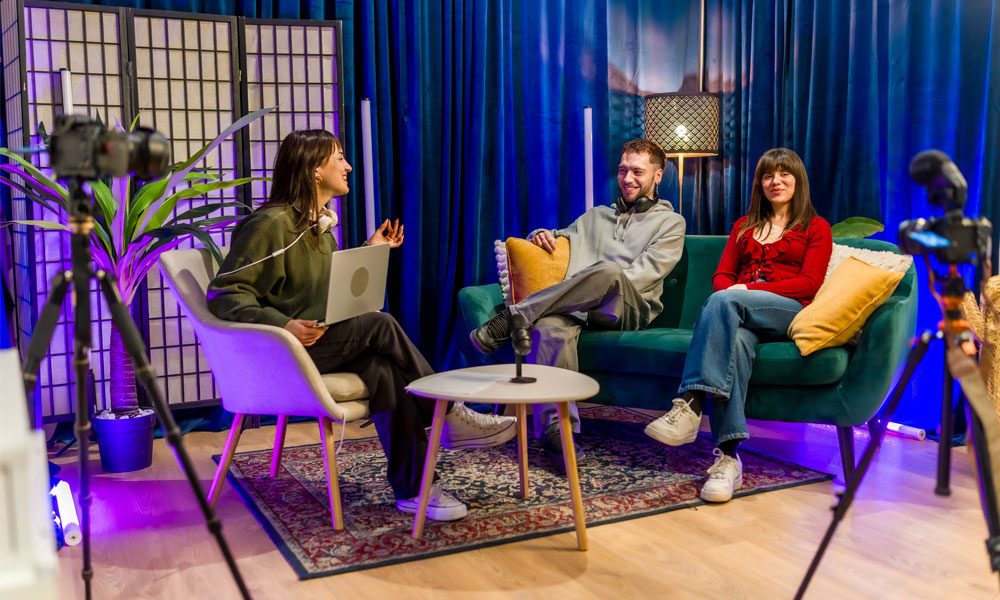
A broadcast interview should never be treated as a standalone moment. Whether your spokesperson is appearing on television, speaking on radio or joining a live podcast, that appearance can do much more than reach one audience in one slot. When it is properly connected to your wider communications planning, it can support brand visibility before the interview begins, strengthen engagement while it is happening and continue delivering value long after it ends.
Too often, businesses focus all their energy on preparing for the interview itself and give very little thought to how it will work alongside their social channels. That is a missed opportunity. Social media can help build interest before the appearance, amplify key messages during it and extend its life afterwards through clips, commentary and follow-up content. In effect, it helps every interview work harder for the brand.
This is where media training becomes even more valuable. It is not only about sounding polished in front of a journalist or broadcaster. It is also about understanding how short clips, direct quotes and live reaction can shape brand perception across multiple platforms. The same principle is even more important in crisis media training, where online reaction can build just as quickly as the original broadcast coverage.
Why broadcast and social should work together
Broadcast interviews and social media often reach different audiences in different ways. A television or radio appearance may reach a broad audience in the moment, while social media allows the organisation to shape how that appearance is introduced, discussed and remembered. When the two are aligned, the interview becomes part of a larger communications effort rather than a single isolated event.
This matters because audiences no longer consume media in one place. Someone may hear a radio interview live, then see a short clip on LinkedIn later that day, followed by a quote graphic on Instagram or a discussion thread on X. If the organisation plans properly, all of those touchpoints can reinforce the same key messages.
A good broadcast appearance can build authority, but social media can give that authority extra reach and repetition. It can also help the organisation speak in its own voice rather than relying entirely on a broadcaster’s framing. That creates more opportunities to reinforce expertise, build trust and maintain control of the message.
Tease the interview before it happens
One of the simplest ways to get more value from a broadcast appearance is to promote it in advance. If a spokesperson is due to appear on television, radio or a podcast, social media can be used to let audiences know what is coming and why it matters.
This does not need to be overcomplicated. A short post announcing the appearance, where it can be watched or heard and what topic will be discussed is often enough to build interest. It gives followers a reason to tune in and positions the spokesperson as someone worth listening to before they have even gone on air.
Pre-interview posts also help organisations frame the appearance in a way that supports their strategic goals. If the interview is about a business issue, public policy topic, sector trend or reputational challenge, the social teaser can underline why the organisation is part of that conversation. This helps ensure the appearance feels intentional rather than random.
From a media training perspective, this matters because it encourages the team to think more clearly about the main message in advance. If the organisation cannot explain the relevance of the interview in one or two short social posts, it is a sign that the messages may still need tightening before the spokesperson steps into the studio.
Support the interview with live posting where appropriate
Not every interview needs live posting, but when it suits the format and audience, it can help increase visibility while the appearance is happening. A live social post during a broadcast interview can remind followers to tune in, share a key point in real time or direct people to where the content can be accessed.
This works particularly well for scheduled television appearances, planned radio segments and major podcast releases. It can create a sense of timeliness and help audiences feel they are part of a live conversation rather than discovering it much later.
Live posting needs care, though. The social team should know the likely talking points in advance and be aligned with the spokesperson’s key messages. That is another reason media training is useful. A well-trained spokesperson is more likely to deliver concise, quotable lines that the digital team can confidently support in real time.
In crisis media training situations, live posting becomes more sensitive. It can still be useful, but only if there is a clear plan. The organisation must avoid fuelling confusion, overreacting to criticism or posting anything that conflicts with what is being said on air. Consistency is essential.
Clip the strongest moments afterwards
Once the interview has happened, the work is not over. In many cases, the real long-term value begins afterwards. A strong answer, a memorable phrase or a particularly clear explanation can often be turned into a short social clip that continues driving engagement.
This is one of the most effective ways to extend the life of a broadcast appearance. Many people who would never watch a full interview are willing to engage with a thirty-second clip or a short audio extract. Done well, that content can support brand awareness, thought leadership and credibility for days or even weeks after the original appearance.
The quality of those clips depends heavily on the original interview performance. Rambling answers are difficult to edit into something useful. Dense jargon rarely performs well online. Clear, focused answers are much easier to repurpose. That is why media training matters so much. It helps spokespeople deliver lines that are not only good for the interview itself, but also strong enough to stand alone in clipped form afterwards.
A good social follow-up strategy might include short video clips, quote cards, summary posts and links to the full interview where available. This allows the organisation to reach different audiences in different formats while staying anchored to the same core messages.
Respond to online reaction with discipline
Social media also creates immediate public reaction, and organisations need to be prepared for that. Some interviews will generate praise, questions, debate or criticism within minutes. That reaction should not be ignored, but it should not be handled impulsively either.
The communications team should have a clear sense of how they will respond if comments start gathering momentum. In some cases, the right move may be to acknowledge and clarify. In others, it may be better to avoid getting pulled into unproductive arguments and instead reinforce the original message calmly through follow-up content.
This is especially important in crisis media training scenarios, where online conversation can become intense very quickly. A spokesperson may perform strongly on air, but the organisation can still lose control of the wider narrative if the social response is slow, defensive or inconsistent. Planning for reaction in advance helps prevent this.
The social team should know the likely pressure points, the boundaries of what can be said and the tone that should be maintained. When the interview and social strategy are joined up, responses feel more measured and aligned with the brand.
Make every interview part of a wider strategy
The strongest organisations do not see broadcast interviews as isolated media moments. They treat them as part of a wider communications system in which broadcast, digital and brand messaging all support one another.
That means planning before the interview, supporting it in real time where useful, repurposing its best moments afterwards and managing online reaction with discipline. When those steps are built into the process, every appearance has more impact and more lasting value.
Media training plays a central role in making this possible. It helps spokespeople deliver stronger answers, sharper messages and more usable content across channels. Crisis media training adds another layer by helping organisations stay consistent under scrutiny, even when the pressure is high.
When broadcast interviews and social media strategy are properly connected, the result is simple: the brand gets more value from every appearance, the messages travel further and the organisation stays in control of how it is seen and heard.